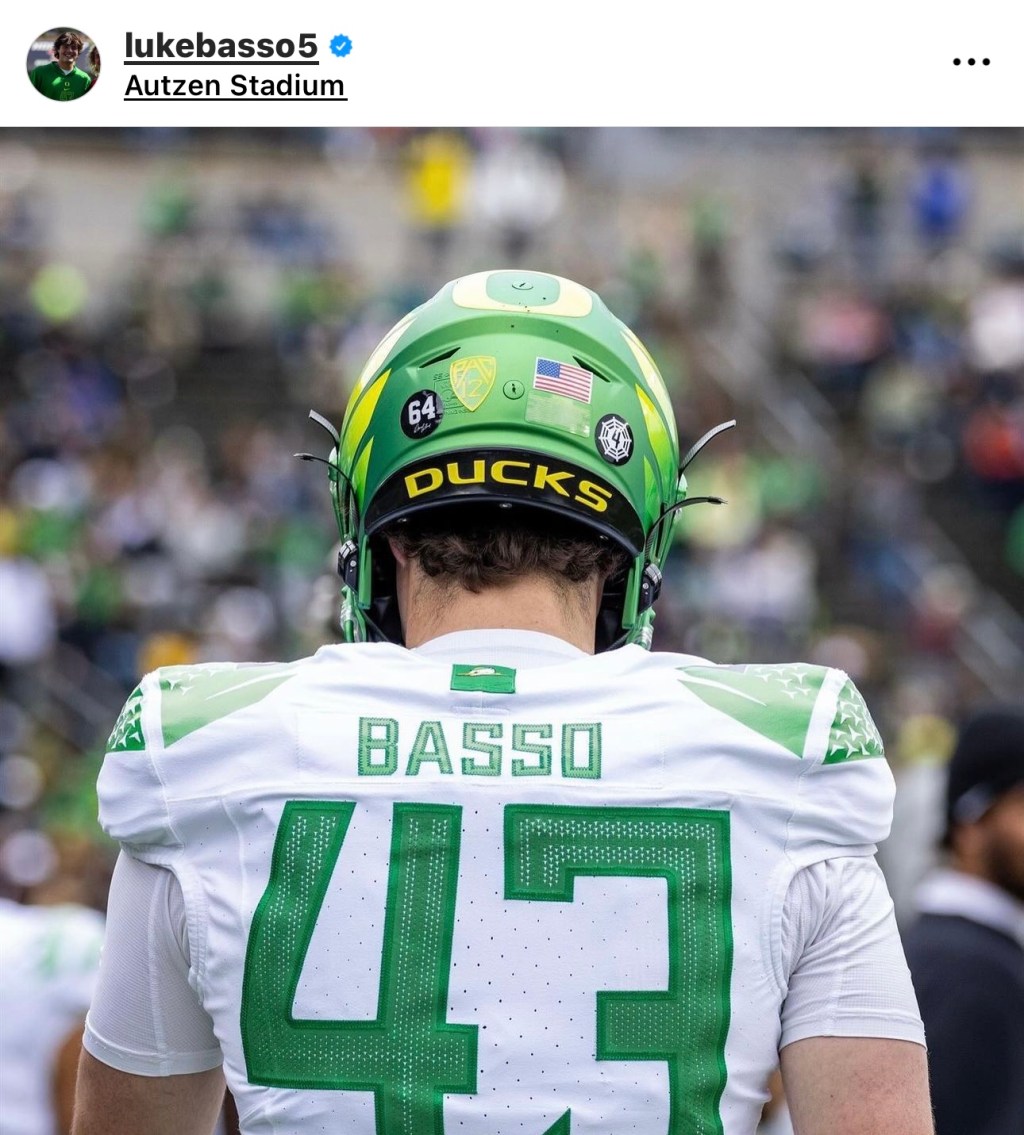
Luke Basso, a long-snapper for the Oregon Ducks, is going on his junior season playing on the football team. He is from Lake Oswego, Oregon. Coming out of high school, he was the No. 3 long snapper in the class of 2021. Playing college football was an easy decision for him. In an interview, I got to ask behind-the-scenes questions and get his inside thoughts on specifically the PR aspects of college football.
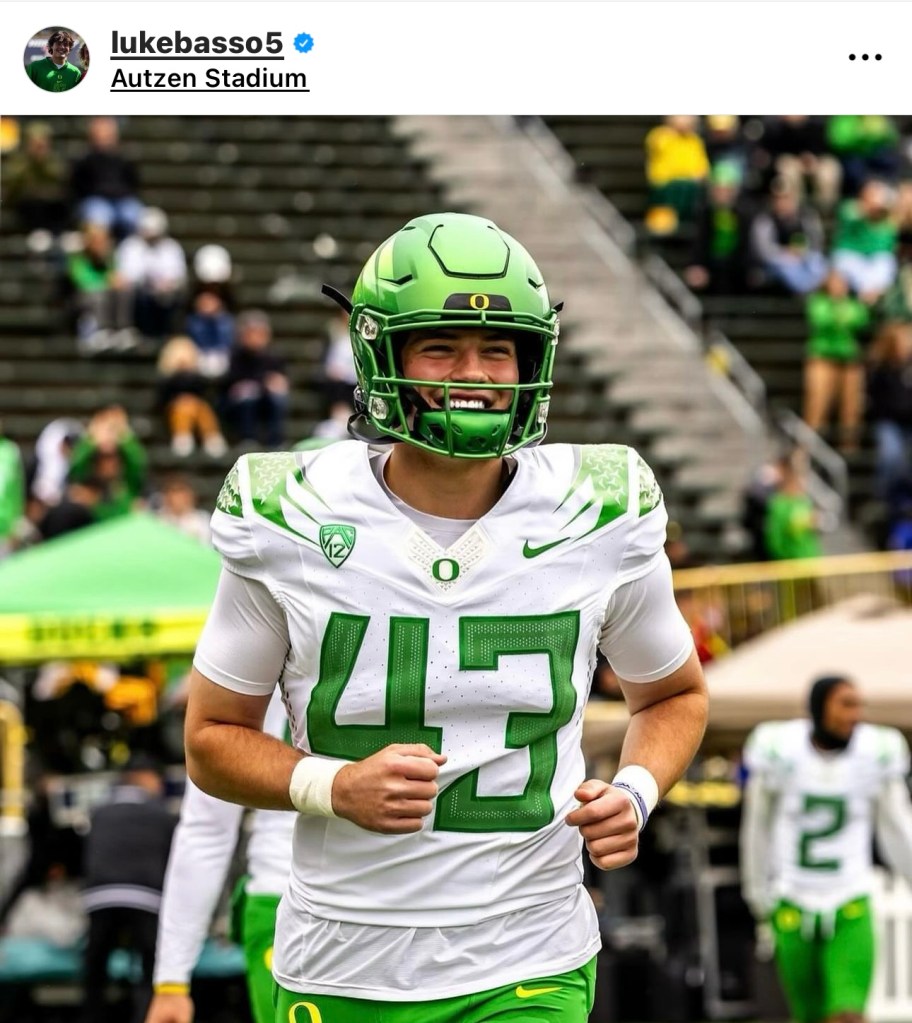
Can you tell me about your journey to becoming a college football player?
Basso: “My journey to becoming a football player basically began the day I was born. One of my very first toys as a kid was a stuffed football. My family has a long background in football. My dad played college ball which motivated me at a very young age to start playing. I began in kindergarten and stuck with it every single day of my life.”
What is your favorite part about playing for the University of Oregon?
Basso: “My favorite part about playing at the University of Oregon is getting to say I play for my home state. It’s a blessing and an honor each time I step on that field to represent the “O” on my chest. I’m very thankful I get to play where I grew up and make my family and friends back home proud.”
How do you manage your public image and interactions with the media?
Basso: “I manage my public image and interactions with the media by always being careful with what I post, say, and do. We get a lot of help from the team as they constantly remind us how to hold ourselves and represent each other. Football puts us under a spotlight so it’s important to be accountable for our actions and words.”
What role does social media play in your life as a college athlete?
Basso: “Social media plays a heavy role in my life as a college athlete. Although I’m not a huge fan of social media, I know that it helps build your brand and can provide opportunities and connections. I balance personal expression while maintaining a professional image pretty easily. It’s important to be authentic and never lose sight of what you love outside of the game. I always express myself on social media with people and things I love, know, and care about. People and things that won’t put me in harm’s way and will support my aspirations on the football field.”
Have you had any experiences where media portrayal affected you or your team? How did you deal with it?
Basso: “I personally haven’t had any experiences where media portrayal affected me negatively, however, there have been times where my team has been impacted. My teammates and I deal with it by not reading into anything too much and not allowing outside noise to impact the good we have going on within the team. Media can be very harsh and it’s important to stick up for one another and block out any hate that we can’t control.”
Can you share an example of a time when you used social media to positively impact your team or community?
Basso: “An example of a time when I used the media to positively impact my team and community was when I posted and promoted the annual Turkey Drive over Thanksgiving. The goal of the Turkey Drive is to provide those in the Eugene area with food over the holidays so that nobody is left out or left hungry. Promoting this allowed me to get the word out and show that the community comes first and there are so many bigger things in life than football.”
How important do you think PR is for athletes?
I think PR is vital for athletes as long as the athletes are willing to build positive relationships with the media and sports journalists. PR can help showcase your strengths and lay the groundwork for success in the future.
How do you think media coverage affects public perception of college athletes and their teams?
Basso: “I think media coverage has a huge impact on the public perception of college athletes and their teams. The honest truth is that most people will always believe the media without knowing anything or researching further. The more media coverage a team gets the more that team is going to be under the spotlight. Sometimes it’s negative and sometimes it’s positive, but the large impact is always there.”
In what ways do you think athletes can use the media to advocate for causes they care about?
Basso: “I think athletes can use the media to advocate for causes they care about in a ton of ways. By leveraging influence, athletes can raise awareness, initiate discussions, and inspire action on issues ranging from social justice to environmental conservation. Whether through interviews, social media, or press conferences, athletes can effectively advocate for meaningful change and encourage others to join their efforts.”
How does UO prepare you for the media spotlight?
Basso: “UO has done a great job of preparing me for the media spotlight. With Oregon being such a massive national brand while also having a ton of media coverage, I’ve been able to watch how others hold themselves and learn from it. Being in this program and receiving all this coaching has prepared me well.”
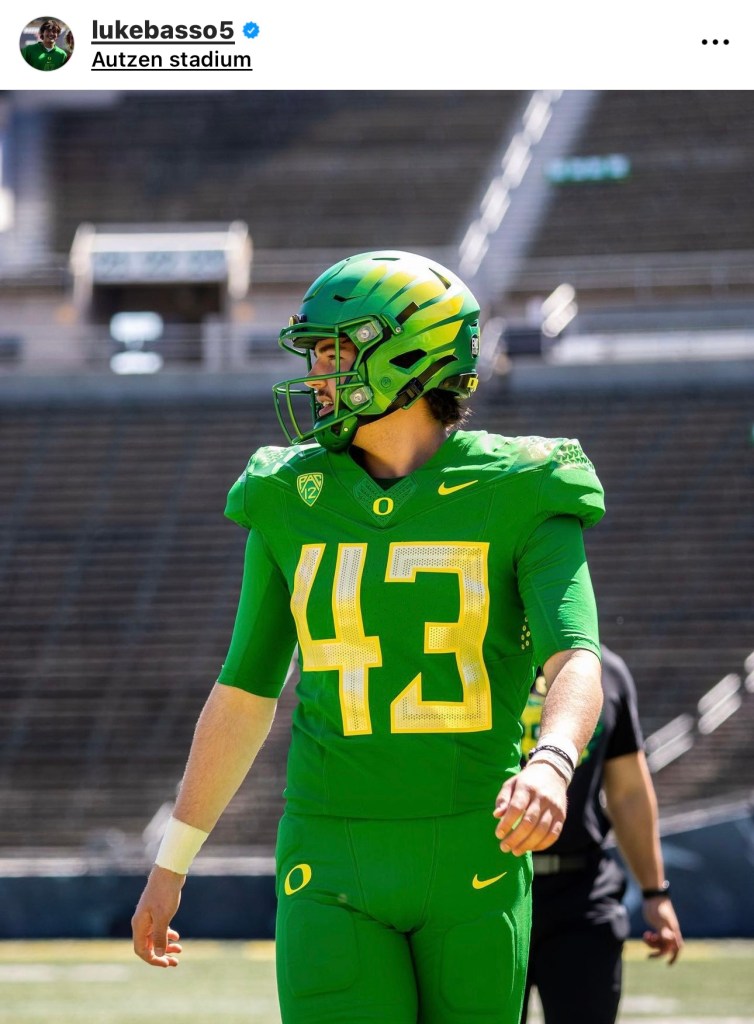
Basso provided me with some great insights into how the PR world works for him as a student-athlete. Hopefully, most student-athletes feel comfortable with the media that surrounds them and their sport. Navigating the media for anyone is difficult, but it is even harder when you are in the spotlight. Student-athletes constantly have all eyes on them. These college programs must help them prepare for how to handle it. Thank you, Luke!
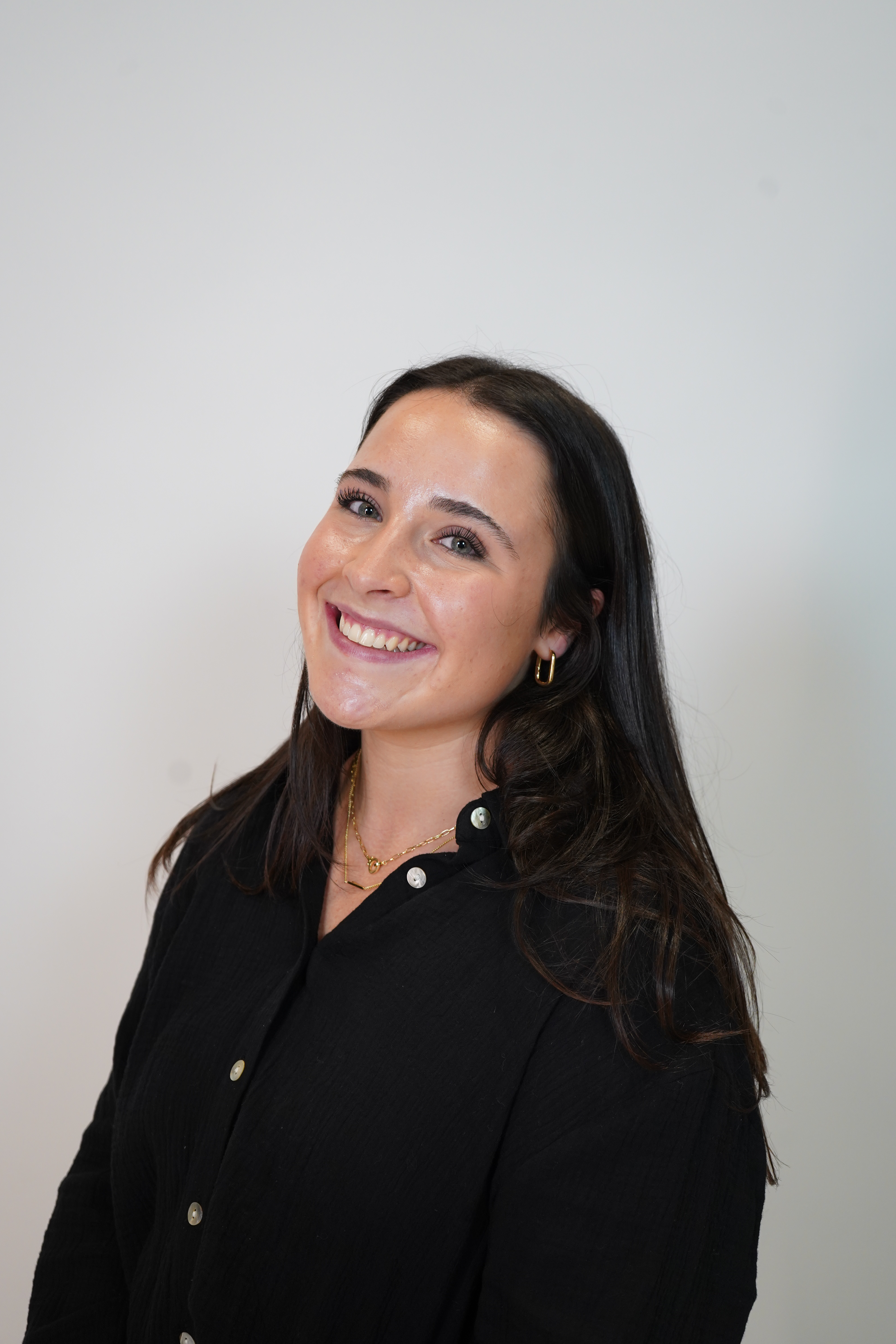
 Addie Peterson
Leave a comment